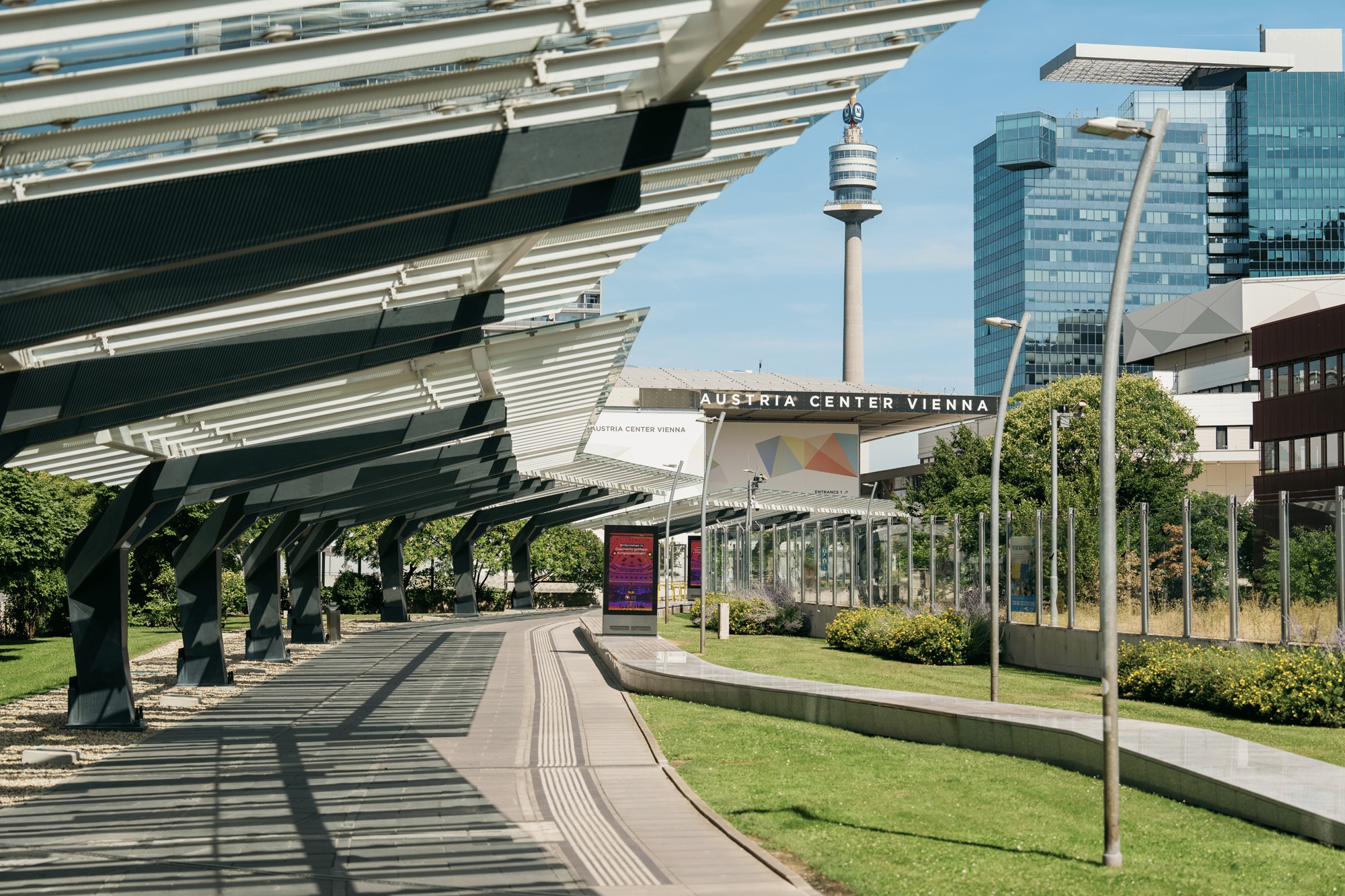
The notion of a “15-minute city” was developed by Carlos Moreno, a university professor specialising in complex systems and smart cities at the Sorbonne in Paris. The concept revolves around being able to reach all the places you need for day-to-day living on foot or by bicycle within 15 minutes; you should be able to get from your home to the supermarket, the park or your school, or access medical care, all within a quarter of an hour, without using any means of transport that is harmful to the environment. The aim is to create more compact, walkable communities where people are less dependent on cars.
In 2024, Vittorio Loreto and his team developed a method that visualises how closely a conurbation conforms to the “15-minute city” ideal. Loreto is Professor of Physics of Complex Systems at Sapienza University in Rome and the founder of the Sony Computer Science Laboratories in the same city; both institutions also have links with Vienna’s Complexity Science Hub.
The study, which was published in the scientific journal Nature, shows that, by global comparison, a lot of European cities (such as Milan, Copenhagen, Lisbon and Paris) score very highly for ease of access; in cities in the USA, Africa and parts of Asia, people are often obliged to make considerably longer journeys to meet their basic needs. One of the study’s conclusions is that, while the “15-minute city” may be a sensible goal for some locations, it does not represent a universal solution for every urban challenge globally.
Austria’s cities have performed very well in this analysis. The top three were Graz, where 92% of residents can reach all essential services on foot within 15 minutes, followed by Vienna on 91% and Innsbruck on 89%.
Compared globally, Vienna is already a city of pedestrians, with the Viennese covering more than a third of routine journeys on foot. Programmes are constantly being introduced in the city to boost this trend, including an expansion of Vienna’s network of footpaths, the creation of more walkways, opening up new pedestrian zones and setting up cycle lanes. These civil engineering projects also have positive effects on city air quality, creating fewer paved areas and reducing noise levels; lively neighbourhoods and increased quality of experience in public spaces are a pleasant added bonus.