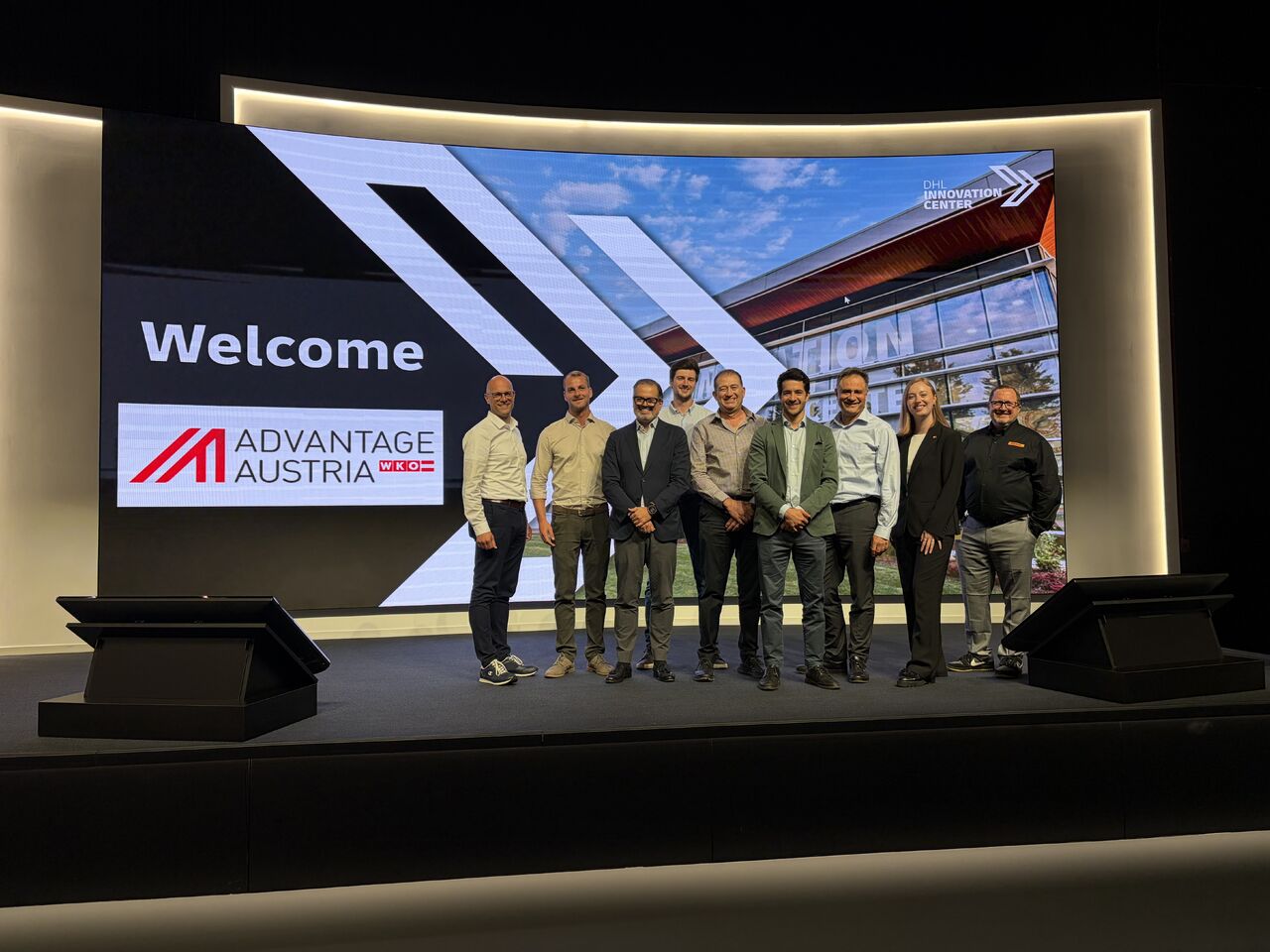
Rafael Krammer is the founder and CEO of Kram Bridge Holdings, Inc., an American import and distribution company based in Illinois. Originally from Styria, Rafael is passionate about connecting Austrian food and beverage manufacturers with partners in the US market.
We asked him about his experience in the US, including his successes and challenges, and what makes Austrian food and beverage products so special. The below interview has been translated and edited for length.
Tell us about your company.
Kram Bridge Holdings, Inc. (KBH) is a U.S.-based import and distribution company headquartered in Illinois. Our mission is actually quite simple: We build a bridge between high-quality European manufacturers and the North American market.
KBH supports its partners in entering the U.S. and Canadian markets and, on the North American side, handles imports, compliance, transportation, and logistics, as well as the development of sales and customer relationships. A particular focus is on Austrian food and beverage products with clear differentiation and growth potential.
Manufacturers and product partners in its portfolio include Estyria Naturprodukte from Styria, Crunchyco/Mirovita in the innovative snack products segment, and Shield Potion in the beverage sector. Among other things, KBH has successfully established Styrian pumpkin seed oil in North America in collaboration with Estyria.
In the long term, KBH aims to open its existing structures to additional Austrian manufacturers and become a leading import and distribution partner for Austrian food products in North America.
How did you personally get into the food industry?
My professional background actually lies in a completely different industry. I worked in the automotive industry for a total of 19 years, most recently as sales manager and authorized signatory at a large Styrian car dealership.
After this long and very formative period, I decided to strike out on a new path, move to the U.S., and start my own business.
My entry into the food industry ultimately came about through Estyria and Andreas Cretnik. At the time, Andreas convinced me of the products’ merits and, in particular, their potential for the North American market. This initially led to the idea of offering these products in the U.S.
Very quickly, however, it became clear to me that a larger business model could be developed from this. If we could successfully establish the necessary structures in North America for a strong Austrian manufacturer, why not apply this model to other products and companies as well?
KBH in its current form emerged from this idea. For me, the partnership with Estyria is therefore far more than a traditional manufacturer-distributor relationship—it was the starting point for our entire business concept.
What unique products or services do you offer your customers? What makes Austrian food products special?
We see ourselves less as traditional distributors and more as market development partners for our manufacturers. We specifically seek out products that stand out from what’s currently available in North America in terms of quality, origin, innovation, or a unique story.
A good example of this is our collaboration with Estyria. Styrian pumpkin seed oil is a well-known product with a long tradition in Austria, but it’s still relatively unknown in North America. That’s exactly where we see an opportunity.
In general, I see a major strength of Austrian food products in the combination of high product quality, expertise, tradition, and innovative spirit. Many of our manufacturers have decades of experience and products that are absolutely competitive on the international stage.
The challenge often isn’t in developing a better product, but in positioning that product correctly in the right market. This is exactly where we want to focus our efforts with KBH.
What have been your successes and challenges in the U.S. market so far?
One of our most significant successes to date is certainly our collaboration with Estyria and Styrian pumpkin seed oil. Together, we’ve succeeded in positioning the product in North America and securing major retail partners in both the U.S. and Canada. That includes Costco. This has even earned me a somewhat unusual nickname in the U.S.: “Kernöl King.”
But what’s far more important to me is that we’re seeing the North American market embrace the product and that this is driving further growth. For us, this is also the first major proof that our business model works: a high-quality Austrian product, a strong manufacturer like Estyria, and an organization based directly in the target market can work together to build something that goes far beyond a traditional export.
At the same time, we’re now in talks with several other Austrian companies about potential partnerships. For me, that’s also a significant success because it shows that our business model is gaining increasing recognition. In the long-term, we want to become the largest importer and distributor of Austrian food products in North America.
One of the biggest challenges was the speed and flexibility demanded by the American market. Decisions are sometimes made very quickly, and then the same speed is expected from the business partner.
The business mindset is different, too. In my experience, when a problem arises here, the question is asked very quickly: How do we solve it? I’ve come to really appreciate this very solution-oriented way of thinking.
The ADVANTAGE AUSTRIA BootCamp USA was a huge help to me when I first started out. It allowed me to identify many challenges early on and, at the same time, build a network in the U.S. Some of these contacts have since become partners with whom KBH now collaborates in various areas.
How do you go about successfully establishing partnerships between Austrian manufacturers and American companies?
We conduct a very targeted search for manufacturers and products where we identify a clear USP or special potential for the North American market. Once we’re convinced, we work with the manufacturer to develop a customized go-to-market strategy. We focus on positioning, target customers, pricing, and the necessary adjustments for the American market.
KBH then takes over the operational structures on the North American side. This includes import, transportation, and logistics, as well as—most importantly to me—sales and customer development in the U.S. and Canada.
In doing so, we simultaneously lower the barrier to entry for our partners. A medium-sized Austrian food manufacturer doesn’t have to immediately set up its own U.S. subsidiary, infrastructure, and sales team to generate its first significant revenue in North America.
The manufacturer can continue to focus on what it does best: producing outstanding products. We focus on building a business around those products in North America.
For me, that is the core of our model: When our partners grow, we grow too.
What advice would you give to other Austrian companies looking to enter the U.S. market?
My most important piece of advice would be: Have the courage to tap into new markets.
Austria is an export-oriented country. That’s why I believe our companies need to tap into new sales markets in the long term, and North America offers enormous opportunities in this regard. Of course, entering a new market involves risk, investment, and hard work—but in my opinion, the opportunity is worth it.
At the same time, I wouldn’t recommend anyone go to the U.S. completely unprepared. A product that’s successful in Austria or Europe won’t automatically work the same way in America.
You have to understand the market, be willing to adapt, and, above all, know the right people on the ground. In doing so, you should make use of existing structures. Institutions such as the WKO and ADVANTAGE AUSTRIA can be of enormous help in getting started, as can local partners who already know the market.
And you don’t have to build everything from scratch right from day one. For small and medium-sized enterprises in particular, partnerships can be a way to test a market with manageable risk at first and then grow together. My conclusion, therefore, would be: Yes, expanding across the Atlantic involves risk—but the opportunity is worth it.
Which Austrian companies might be interested in partnering with KBH?
We’re not just looking for as many products as possible. We’re interested in manufacturers that offer something unique—such as a clear USP, exceptional quality, a distinctive origin, innovation, or a product category where we see a market gap in North America.
These don’t necessarily have to be large companies. Our model can be particularly appealing to innovative small and medium-sized manufacturers because it allows them to enter the market with us without having to immediately establish a full-fledged organization of their own in North America.
We’re currently in talks with several Austrian companies about potential partnerships. Our portfolio is therefore set to grow step by step—but very deliberately and only with products where we truly believe in their potential in the North American market.
Where do you see the greatest opportunities for Austrian food products in North America?
I believe that origin and quality alone are no longer enough today. It becomes particularly interesting where these Austrian strengths align with the current needs of North American consumers.
These could include innovative snacks, functional foods, plant-based protein products, high-quality natural ingredients, or products with an authentic origin story.
For example, we see considerable potential beyond traditional pumpkin seed oil throughout the pumpkin seed value chain. At the same time, we’re exploring other snack, food, and beverage categories.
For me, the key is not simply to ask, “What can we export from Austria?” but rather, “What is the North American market looking for—and which Austrian manufacturer can offer something special to meet that need?” This is precisely where we want to position KBH.