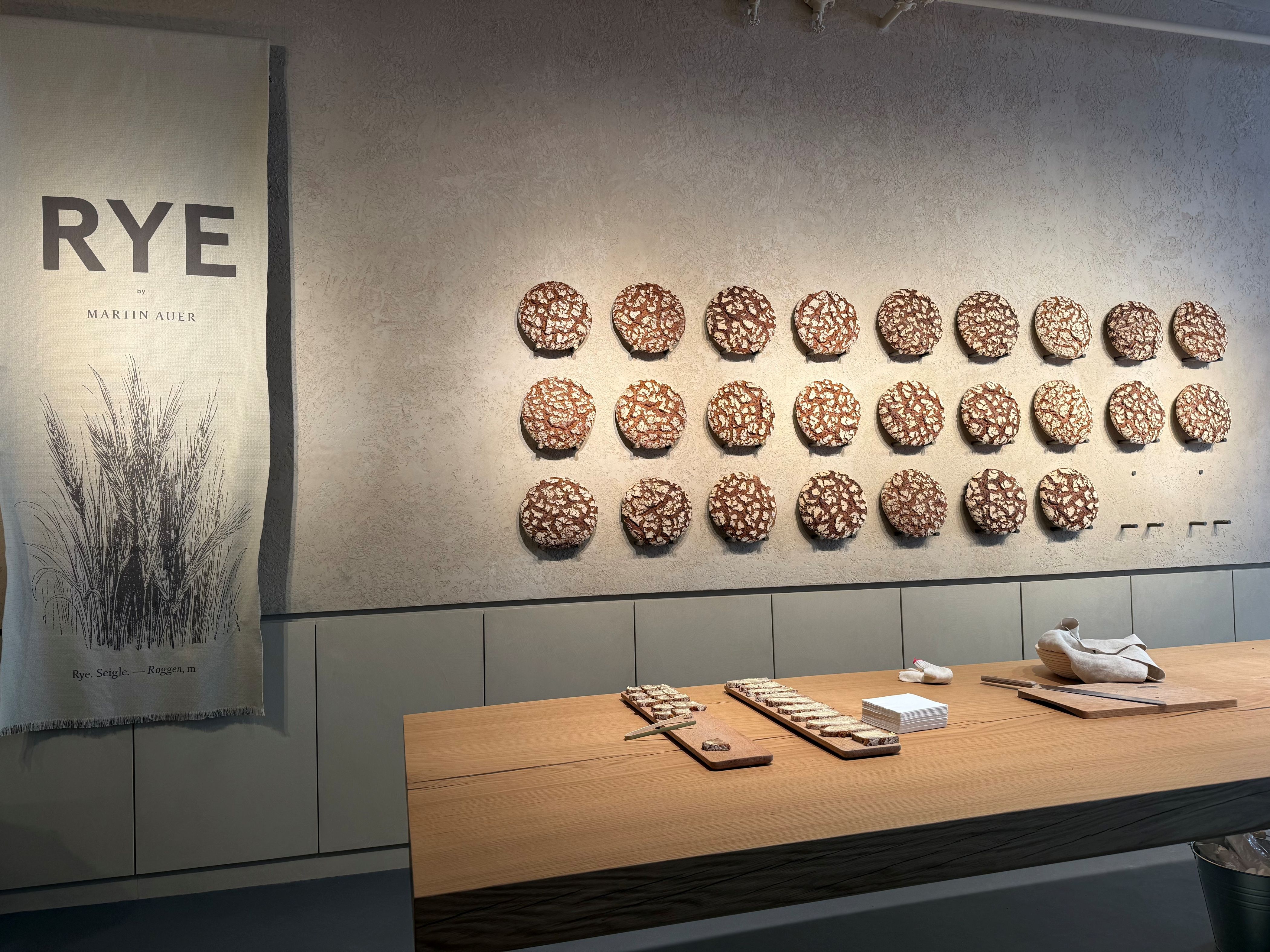
On September 10, 2026, the showcase bakery RYE by Martin Auer opened its doors to the public for the first time on Lafayette Street in SoHo. The concept is simple: one product, rye sourdough bread, executed to perfection.
For many people across Austria, Martin Auer is part of their weekly shopping routine. Now, the company is looking to conquer New York City. The team chose New York for several reasons. First, it is considered the “capital of the world” and the ultimate place to test new ideas and concepts.
“The restaurant scene in New York City and people’s appetite for new experiences are incredible,” says Linda Spann, COO of RYE.
There is also a personal connection. Martin Auer’s grandmother, whose portrait hangs inside the bakery, always dreamed of going to New York City. In addition, RYE offers tourists and expats from the DACH region who have moved to New York the opportunity to enjoy a small piece of home in the United States.
The goal of the SoHo bakery is not merely to sell a loaf of bread, but to offer an entire experience. Following the motto “Go big or go home,” the entire space has been designed to showcase rye bread. Part of the floor plan is dedicated to the bakery itself, where dough is mixed and bread is baked directly in front of customers. There is also a station where loaves are sold whole, half, or quarter-sized, as well as a table featuring the so-called “On-RYE” selection.
In addition to selling loaves, RYE offers open-faced sandwiches, introducing Austria’s traditional culture of bread with spreads to the United States for the first time. From Liptauer spread and salmon cream cheese to the unique seeded honey topping, there is something for every taste. It also provides customers with the opportunity to enjoy the bakery’s highly sought-after bread without committing to an entire loaf.
Sophie Aulitzky, General Manager of RYE, describes the customer base as highly diverse. One important target group consists of “foodies: health-conscious, curious people with a strong visual sensibility who recognize beauty when they see it.” At the same time, RYE appeals to families with children looking for a quick, healthy meal, as rye bread is filling and appealing even to younger consumers.
Another major customer group consists of working professionals in their thirties, who particularly appreciate the bread’s long shelf life. The RYE baking team, made up of Martin Auer himself, Head Baker Alex, and many others, has managed to create a product from just four natural ingredients that ensure that the bread remains fresh for up to ten days when stored properly, all without preservatives.
What unites this broad customer base is an appreciation for craftsmanship and the uniqueness of this bread within New York City.
Entering the U.S. market from Austria naturally comes with challenges. Regulations concerning food service and food safety in New York City are particularly strict, especially for businesses like RYE that both manufacture and sell on-site. Aulitzky and Spann agree that the United States is “not nearly as bureaucratically simple as people often assume, because the infrastructure needed to comply with all the regulations is not always in place. In that respect, you learn to appreciate how quickly and efficiently things work in Austria.”
However, one pleasant surprise has been the speed of hiring employees in the United States. “We interviewed someone the day before yesterday, and today she is already working in the kitchen,” reports Aulitzky. Both women describe the American workplace culture as notably friendly, with colleagues joking and forming friendships after only a few days of knowing one another. “The warm, collaborative atmosphere among employees creates a very enjoyable working environment,” says Spann.
The focus on a single product is something new in New York City and is what sets RYE apart from other bakeries. At the same time, this concept increases the pressure to perfect that product. From the initial idea to the final recipe, the development process took almost a decade. Baking a sourdough loaf made entirely from rye flour is considerably more challenging than baking with wheat flour because rye contains significantly less gluten.
For the bread baked in NYC, 100% organic rye flour is flown in from Austria. The flour blend combines different rye varieties with varying roasting and milling levels. To determine the ideal recipe, the entire team, led by Head Baker Alex, baked and tested countless loaves until every detail was refined.
The product’s history extends far beyond Martin Auer himself. Martin Auer’s grandfather also baked rye bread, although it took considerable time after World War II for the product to gain widespread acceptance. As customers discovered how dense and satisfying rye bread was, its popularity continued to grow, a trend that still drives demand today. For this reason, rye sourdough bread has long been a permanent fixture in the company’s Austrian product range.
“We are especially proud of this bread,” says Aulitzky. “That is why we want to give it a stage here in SoHo, NYC, one of the most sought-after locations in the world.”
“We never expected this level of media attention,” Spann and Aulitzky explain. The $60 loaf has become a talking point around the world and has generated a great deal of discussion. “You get a lot of bread for your money, almost 1.5 kilograms. Most customers do not buy the entire loaf anyway; the quarter loaf is by far the most popular option. It is also important to consider income levels in NYC compared to Austria. Especially in a location like SoHo, people spend far more on dining and hospitality than they do in Austria.”
As mentioned earlier, however, RYE is much more than a bakery. It is a stage for a unique product in New York City. Its sales staff act as storytellers, guiding customers through the craftsmanship, history, and details behind the bread.
“Americans are still learning to appreciate the kind of bread culture that exists in Austria. That is why our storytellers explain exactly how much work goes into making the bread and how it should be stored and sliced. After all, how can someone know how special a product is if nobody explains it? And that is ultimately how we hope to achieve our goal: by sharing our passion and enthusiasm for this product and inspiring others to feel the same.”
Article by Anna Danninger and Sophie Haas