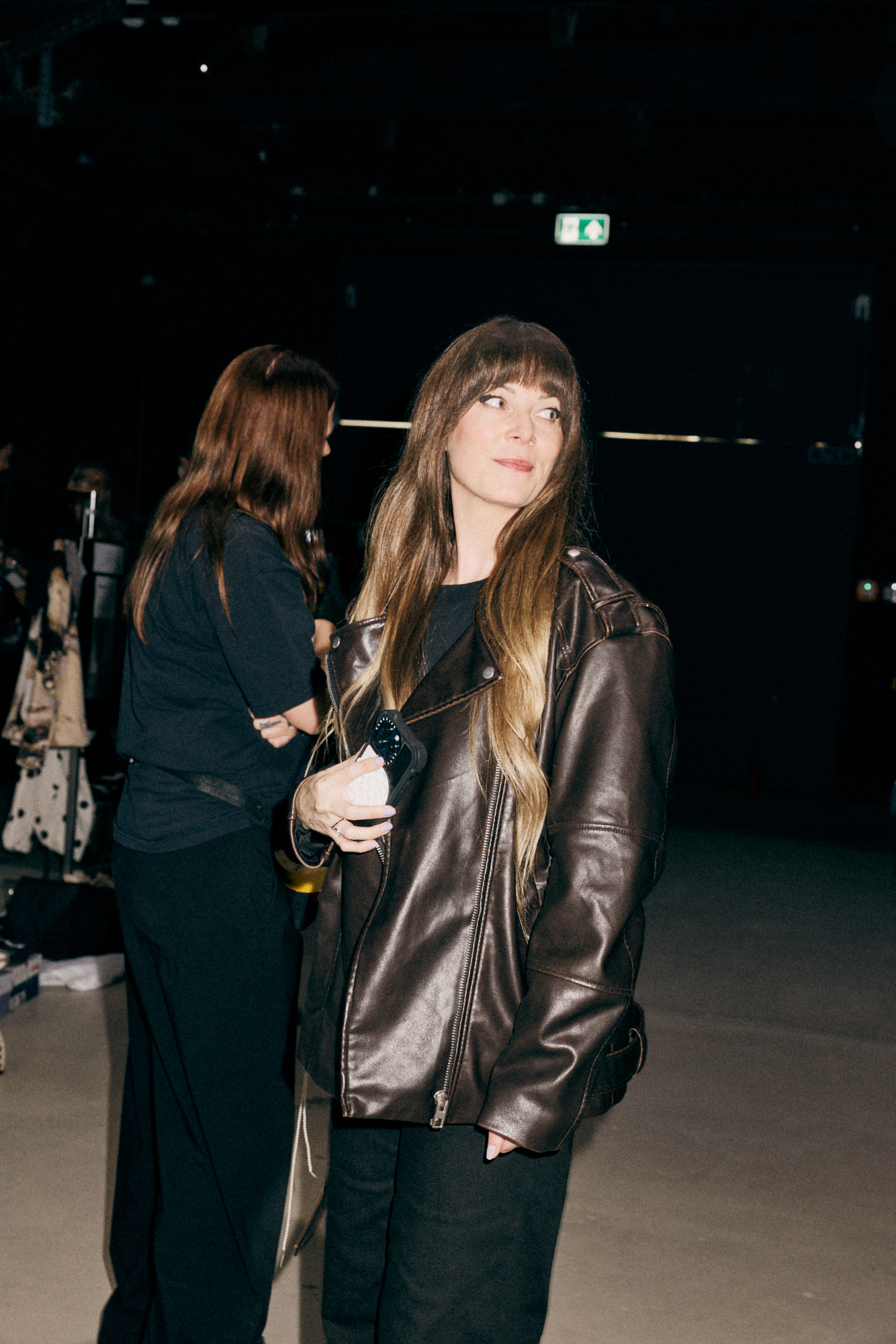
Rebekka Ruétz, one of Austria’s best-known fashion designers, joined us via video call from her studio in Innsbruck on a beautiful late-summer day with temperatures reaching 28 degrees Celsius. Born and raised in Tyrol, she attended the Ferrarischool in Innsbruck before studying at the Academy of Fashion and Design in Munich. Her professional journey then took her to London, where she worked for Peter Pilotto, before ultimately taking the leap into entrepreneurship and founding her own label, rebekka ruétz, in 2009.
Now, she is considering expanding further into international markets. ADVANTAGE AUSTRIA USA had the opportunity to speak with her about her life, her creative work, and her perspective on the future of fashion in an international context. We also discussed the possibility of entering the U.S. market and her plans for further international projects.
How has your Austrian background influenced your creative perspective and your work?
My Austrian background, and particularly upbringing in Tyrol, continues to shape my creative perspective to this day. The impressive mountain landscape, its majestic presence, and the contrast between narrow valleys and boundless open spaces have left a deep impression on the way I think and create.
At the same time, I grew up in a ski resort surrounded by tourism, so from an early age I encountered people from many different countries and cultures. That sparked my curiosity about the world and has certainly had a lasting influence on me. For me, Austria therefore represents calmness, nature, and a sense of being rooted on the one hand, but also openness, internationalism, and a desire to look beyond borders on the other. These two aspects continue to be reflected in my work today.
What challenges did you have to overcome on your journey from Austria to the international fashion scene?
Before becoming self-employed, I lived in London and worked for Peter Pilotto. It was never really my plan to start my own label. My goal had always been to work for a major fashion house. But at some point, the spontaneous idea came up to take the leap and start my own business. Looking back, I would say there was a healthy dose of naivety involved, but also a tremendous amount of passion.
When I started building my label from Austria, I quickly realized how important networks are within the fashion industry. At the time, my professional network was primarily based in London, while in Austria I first had to establish many of those connections from scratch. Practical matters, such as finding the right seamstresses or learning how to work with the media, also turned out to be greater challenges than I had initially expected.
At the same time, I thought internationally from the very beginning. Although I was working and producing in Austria, I entered the wider German-speaking market immediately and was present at Berlin Fashion Week from the start. Entering the German market was surprisingly straightforward. In Austria, it took a little longer for my work to gain attention and recognition. I cannot really say exactly why that was. But in the end, the patience paid off, and it worked.
How do your ideas evolve from the first sketch to the finished collection?
For me, that is the most exciting part of the entire creative process. In fact, sometimes I would love to be a fly on the wall in other designers’ studios just to see how their ideas come to life.
For me, everything begins with a topic that particularly fascinates or preoccupies me. It might be a book, a film, music, architecture, or art in general. Something triggers an impulse that I simply cannot let go of. I then live with that subject for a while, begin researching it, reading about it, and immersing myself more and more deeply in that world. Gradually, my own world begins to emerge from all these thoughts and inspirations. I work in a very visual way and, above all, through emotions. Often, I can already feel a collection before I can actually see it in concrete terms. Images, moods, and emotions begin to form in my mind and gradually become more defined.
Because I work with a fantastic team who, naturally, cannot look inside my head, there comes a point when I have to make this inner world visible. At the same time, I try to keep the process open for as long as possible and leave room for change. That is when the first sketches, silhouettes, pattern ideas, and material proposals begin to emerge. With every collection, I want to challenge myself, discover new materials, and experiment with techniques I have never worked with before. Not everything works, and for me, that is just as much a part of the process. Some ideas disappear again, while others develop in an entirely new direction. The closer Fashion Week gets, the more everything begins to come together, until eventually the moment arrives when I draw the final collection.
Working with my team, which is 99% female, is particularly valuable to me. We exchange ideas, experiment with materials, and continuously refine the silhouettes. For me, creativity rarely happens in isolation. Ideas change through dialogue, are developed further, or are suddenly viewed from an entirely different perspective. Later on, photographers and videographers become involved, bringing yet another set of perspectives to the project.
What I love most is the moment when something emerges that could never have been planned in exactly that way, because it brings together so much passion, creativity, and the individual signatures of so many different people.
How do you reconcile your emotional world with current trends?
Most of the time, they can be reconciled very well. There are so many different trends that I never really start with a trend as my point of departure. For me, the starting point is much more about a particular mood, attitude, or message that I want to communicate.
When I think about a collection, I often already envision the show, the visual language, or the fashion film, and I ask myself: What do I want people to feel? Only in the next step do I consider which silhouettes, materials, or details can support that mood and message. Whether a piece is backless or has a particular length is secondary to me at first. What matters most is the fundamental idea behind the collection and the emotion it is intended to convey. Everything else develops from there.
Of course, trends always find their way into the process in some form because we never operate entirely outside the context of our time. But I do not consciously try to cater to them. If a trend fits the world I am currently creating, it can quite naturally become part of it.
How do you balance your artistic vision with commercial demands?
For many years, that was actually a major challenge for me. When I founded my label, I started in the traditional way: acquiring retailers and presenting my collections at international trade fairs, including in London and Paris. But at some point, I realized that this model did not really suit me. When financial metrics and sales figures become too dominant, artistic freedom can easily fall by the wayside.
Eventually, I was fortunate, although of course I also worked hard to achieve this, to develop a business model in which my freedom, and especially my artistic freedom, comes first. This became possible through collaborations with various brands.
Today, I no longer distribute my collections through retailers, but sell exclusively and directly to end customers. We also no longer produce anything for stock. This transition went hand in hand with our consistent commitment to sustainability. I produce exclusively to order, and our collections are created using so-called deadstock materials, meaning fabrics that already exist. We also work extensively with upcycling. As a result, the collections automatically come in limited editions, which fits perfectly with my philosophy.
Collaborations with other brands also give me a great deal of artistic freedom. The focus is not on the question of how many pieces we can sell, but rather on the story we want to tell and the message we want to communicate. That is exactly what I love.
It is not about producing containers full of clothing only to sell it at a 70 percent discount a few months later. Precisely because so much work goes into every single piece, from the initial design and pattern-making to the craftsmanship of our seamstresses in Austria and Germany, this conscious and appreciative approach to fashion is particularly important to me.
How do international markets differ from Austria?
That is a good question, and honestly, I can only answer it to a limited extent because I have not had the opportunity to test all of these different markets extensively. However, when I look at my customers today, I have the impression that Austrian customers tend to be slightly more hesitant when it comes to my more extravagant designs. Generally speaking, they are somewhat more conservative and tend to opt for the simpler pieces.
Interestingly, I find customers in Germany to be somewhat more open. Italy is extremely open. Italian women love my designs, which of course makes me particularly happy. Extravagant fashion is also very well received in Switzerland and Liechtenstein, where I am active as well. So, in relation to my own work, I experience Austria as the more reserved market, particularly when it comes to highly expressive or extravagant pieces. In Tyrol especially, practicality and comfort seem to play an important role in everyday life. I completely understand that. At the same time, as a designer, I do not believe that comfort and self-expression have to be contradictory. A piece can be distinctive and still feel good to wear.
Do you feel that a change is taking place? Have you observed any developments in recent years?
I definitely feel that something is changing. Today, I meet more and more customers who identify very strongly with my designs. Whether these people were always there and have only just discovered me, or whether there has actually been a shift in awareness, is difficult for me to say.
What I do notice very clearly, however, is that sustainability is becoming increasingly important to people, while at the same time there is a growing desire to express one’s individuality more strongly.
Of course, the reality is also that you have to be able to afford this kind of fashion. I produce exclusively in Austria and Germany, and a great deal of craftsmanship goes into my collections. The more artistic a collection becomes, and the more manual work that goes into an individual piece, the higher the price inevitably becomes.
Nevertheless, my long-term goal is to make my fashion accessible to more people. Ultimately, I do not believe that someone’s budget alone should determine whether they can wear a particular design. Sustainability, quality, and the opportunity to express your own individuality should be accessible to as many people as possible.
What experiences have you had working with Berlin and other countries, both with retailers and the media?
My most important platform is clearly Berlin Fashion Week. In July, I presented my 30th show there. When I say that out loud, I almost feel a little old. (laughs)
Berlin Fashion Week has changed significantly over the years. Even though, internationally, it might not rank among the very largest fashion platforms, it is highly relevant for the German-speaking market and provides important visibility. I find the media aspect particularly interesting. Personally, I found access to the media relatively straightforward from the beginning. At the same time, I have noticed that the media landscape surrounding Fashion Week is becoming increasingly international, which I very much welcome. Today, many exciting and relevant media outlets are present, continuously creating new perspectives and opportunities to make connections.
I also find it interesting how Berlin itself is perceived as a fashion city and how that perception, in turn, influences the way we as designers are perceived. The city has a very distinctive energy and attitude, and I believe that, as a designer, your work is always interpreted to some extent within that context.
Which markets would you like to explore next?
The United States is the next market I would like to explore. I am particularly interested in seeing how American customers, and New Yorkers in particular, respond to my work. I find New York and NYFW incredibly exciting as a platform, so that would be a natural next step for me.
I could very well imagine deliberately starting small, perhaps with an installation or an event, simply to get a sense of the market: Does the energy suit me? Do I feel comfortable there? How do people react to my work? I think it is important to get to know a new market before taking bigger steps.
Copenhagen Fashion Week is also on my to-do list. We want to broaden our portfolio and explore new platforms, either in addition to Berlin Fashion Week or perhaps, at some point, as an alternative. Before making such a decision, however, I want to understand how each market works.
I find Copenhagen particularly interesting because sustainability is integrated very consistently there, and participating brands are required to meet clear standards. That approach fits very well with my brand and the values we stand for.
What does an Austrian fashion brand need today to succeed internationally?
That is an incredibly interesting question, and I would actually apply it to fashion brands in general.
I believe authenticity is more important today than ever before. You need to know very clearly who you are, what you stand for, and what values and perspectives you represent. That has always been relevant, but in the age of social media and artificial intelligence, it has taken on an entirely new significance for me. Closely connected to this, of course, is the question of identity.
My goal for the future is to shape my brand, and to some extent myself as part of that brand, so clearly that my world becomes immediately understandable. I want people to be able to sense what this world represents and decide for themselves: This world speaks to me, I want to immerse myself in it, or perhaps it does not. For me, that is precisely where the strength of a brand lies: not in trying to appeal to everyone, but in developing such a clear identity that it reaches the right people.
Which developments are currently having the greatest impact on the fashion industry?
One major topic for me is clearly artificial intelligence. I am very curious to see how it will transform the fashion industry over the coming years and what opportunities, but also what challenges, will emerge as a result. At the same time, I feel that sustainability has somewhat faded into the background due to the current political and economic climate. I sincerely hope that it will nevertheless retain an important and lasting place in our society. Quality and longevity remain fundamental values for me, even though it is difficult at the moment to predict the direction in which the industry as a whole will develop.
What I have also noticed is a certain shift back toward faster consumption and fast fashion. Before the pandemic, I felt there was a very strong desire, both within society and the fashion industry, to think more sustainably and genuinely change things. It seems to me that some of that momentum has been lost. In this context, I also find the issue of feminism in fashion particularly interesting. When I look at the creative directors of the major fashion houses, I notice how few women are represented. To me, that feels more like a step backward than progress.
At the same time, however, I also see a strong movement in the opposite direction, and that makes me optimistic. Many young and emerging brands in particular are deeply committed to sustainability, diversity, and female empowerment, and are developing new products and business models around these values. The way we view vintage fashion has also changed considerably. Secondhand and vintage clothing are highly visible and sought-after again. Wearing clothes for longer, passing pieces on, or giving them a second life is becoming increasingly natural, and I think that is a very positive development.
How is Austrian design perceived internationally?
I find it interesting that my brand is very often perceived internationally as a German brand, even though we do not position ourselves that way anywhere. I suspect this has a lot to do with my long-standing presence at Berlin Fashion Week. In fact, Austrian companies regularly approach me about collaborations in the German market because they initially assume that my brand comes from Germany.
Yet Austria has tremendous creative potential and craftsmanship. I personally work with fantastic seamstresses here, and there are also strong foundations in education, with excellent institutions, particularly in Vienna. There is certainly no shortage of talent or expertise. I also believe that many exciting young labels are emerging in Austria. The greater challenge begins when it comes to visibility, growth, and international recognition. As a result, many designers sooner or later gravitate toward larger fashion cities, where the relevant platforms, networks, and markets are more concentrated.
In my view, the Austrian market alone is currently hardly sufficient for a fashion brand seeking international visibility. Additional markets and platforms outside Austria are essential. The creative potential is definitely there. Austria simply has not yet established as clear or visible a position as an international fashion hub as it potentially could.
What projects are you currently working on? Are there any upcoming fashion shows, presentations, or international activities you are particularly looking forward to?
At the moment, I am working on several projects in parallel. On the one hand, we are already developing the Fall/Winter 2027 collection and the Spring/Summer 2028 collection. At the same time, I have developed a new event series called “re-connected.” The idea grew out of the fast-paced nature of the fashion industry. Especially around Fashion Weeks, an incredible amount happens within a very short period of time, and there is often little room to genuinely talk to one another, build relationships, or create meaningful human connections.
That is exactly where “re-connected” comes in. The idea is to consciously reconnect and encounter one another again on a genuinely human level. I am currently working very intensively on this event series, and two events are already planned for the coming year. At the same time, we are considering our next steps into new markets and potential market entries into additional countries.
What goals would you like to achieve with your brand over the next few years?
Over the next few years, I would like to significantly expand the creative scope of rebekka ruétz. In the long term, the brand should represent not only fashion, but a much broader artistic world. I am excited by the idea of immersing myself more deeply in other artistic and creative disciplines and discovering new forms of expression. I cannot, and do not want to, completely define what that will look like today. That is precisely what makes it exciting.
I can very well imagine collaborating more closely with other artists in the future and developing new formats or projects together. For me, it is also a kind of personal journey of exploration: discovering what else I want to express and create as a creative person. Fashion will continue to be an important part of that journey, but in the future, I do not want it to define the entirety of my creative world.
What advice would you give to young Austrian designers who want to succeed internationally?
That is a question I am asked very often, and yet I do not find it particularly easy to answer. I believe, however, that the key lies in discovering what you truly stand for and using that as the foundation for developing your own distinctive design language.
You should not try to be someone else, chase every trend, or create a product for the market as quickly as possible. Particularly in the fashion industry, you need perseverance. There will be phases when things come easily and others that are challenging. To stay on that path in the long term, I believe you need one thing above all: authenticity.
To me, authenticity means doing something you genuinely love and working in a way that feels honest. But it also means being honest with yourself again and again. I have realized that I love my creativity, I love my work, and I love making fashion. At the same time, I know that continuing to evolve is just as important as consistency. My goal is not simply to be able to say today, “I love what I do.” I want to be able to say the same thing ten years from now. To achieve that, you have to allow yourself to change, remain curious, and be open to new paths without losing your own identity.
For me, a long-term career in fashion therefore has a great deal to do with honesty, evolution, and the courage to embrace change.
Is there anything you are particularly looking forward to next year or anything you would like to share?
Despite all the challenges, or perhaps precisely because of them, I’m excited for the future.
Interview by Sophie Haas and Anna Danninger
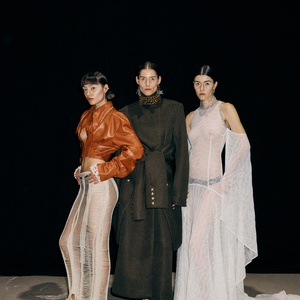
© @annikayanura for @rebekkaruetz
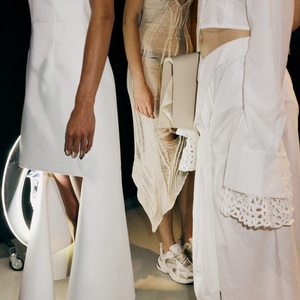
© @annikayanura for @rebekkaruetz
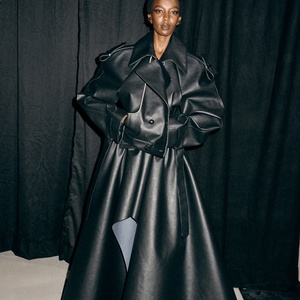
© @annikayanura for @rebekkaruetz
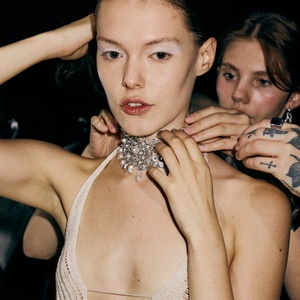
© @annikayanura for @rebekkaruetz
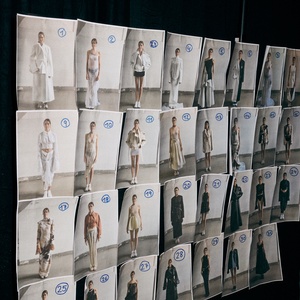
© @annikayanura for @rebekkaruetz
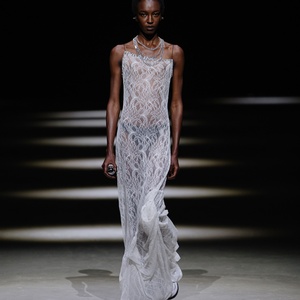
© @marcushartelt for @rebekkaruetz
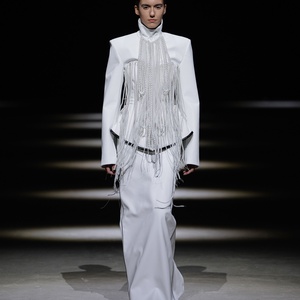
© @marcushartelt for @rebekkaruetz
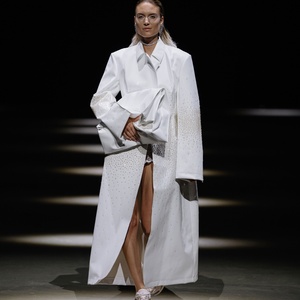
© @marcushartelt for @rebekkaruetz
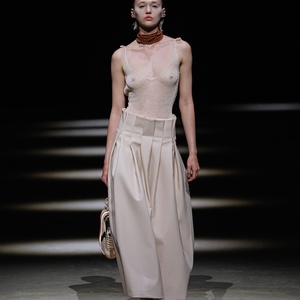
© @marcushartelt for @rebekkaruetz
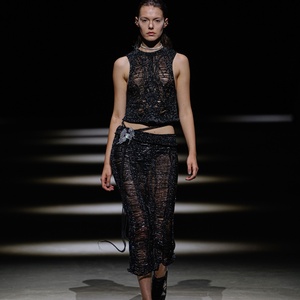
© @marcushartelt for @rebekkaruetz
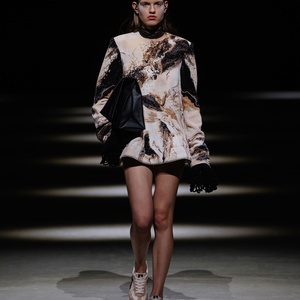
© @marcushartelt for @rebekkaruetz
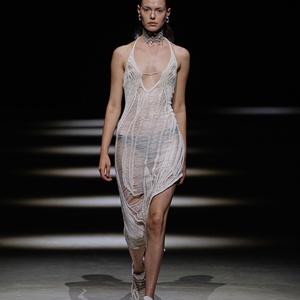
© @marcushartelt for @rebekkaruetz
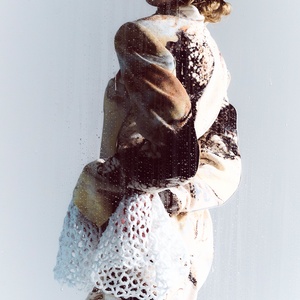
© @lindaleitner for @rebekkaruetz
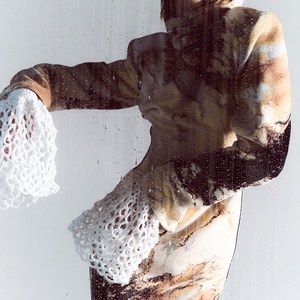
© @lindaleitner for @rebekkaruetz