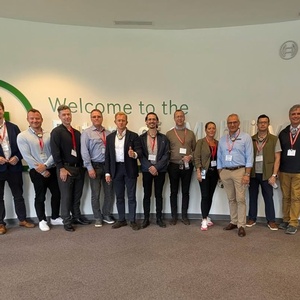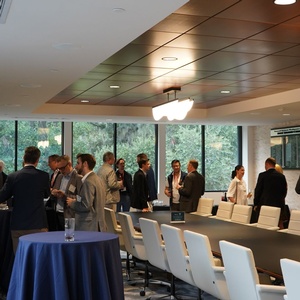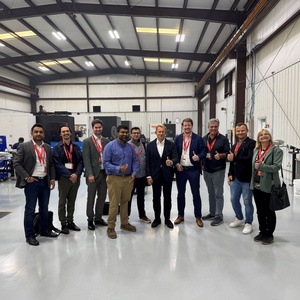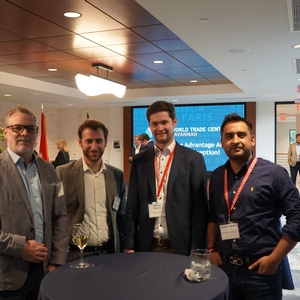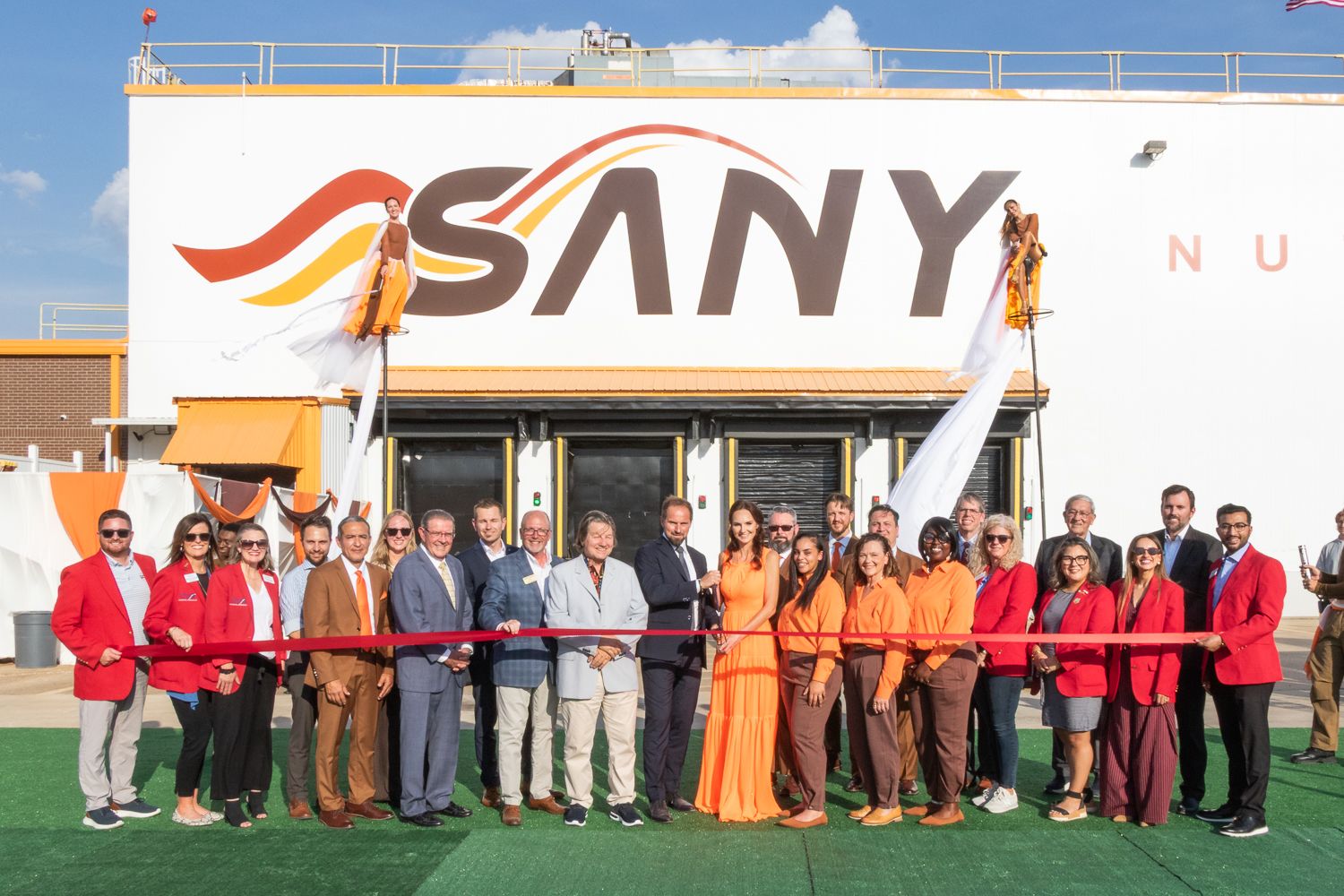
We just wrapped up an exciting week in Charleston, South Carolina, and Savannah, Georgia, with our fourth annual mobility-focused mission to the U.S. Southeast.
Each year, our Tech Days series brings Austrian companies and their U.S. subsidiaries directly into one of the country's fastest-growing industrial regions. This year, roughly half of our participating companies were already established in the United States – an important reminder that international expansion does not end when the subsidiary opens. For many companies, the next challenge is getting closer to customers, understanding how procurement works locally and building the relationships that lead to new business.
Our 2026 delegation represented a broad cross-section of Austrian industrial expertise: DEWETRON, EFS Consulting, HE-MA Production Solutions, Hexagon / NEXTSENSE, IE Connect USA, LTW Intralogistics, MONTRON, Senoplast and Expeditors.
Why South Carolina and Georgia?
There is a reason we continue coming back to this part of the country. South Carolina and Georgia have spent decades building business-friendly environments around manufacturing, infrastructure and international investment. The result has been a steady arrival of companies from Europe and Asia, many of which have built major North American production operations here.
That creates an interesting opportunity for Austrian companies. You do not necessarily need to be the company building the entire vehicle, airplane or production line. Austrian industry is particularly strong in the specialized technologies surrounding those operations – the machinery, measurement systems, components and industrial services that make increasingly complex manufacturing possible. That became especially clear during our first day in Charleston.
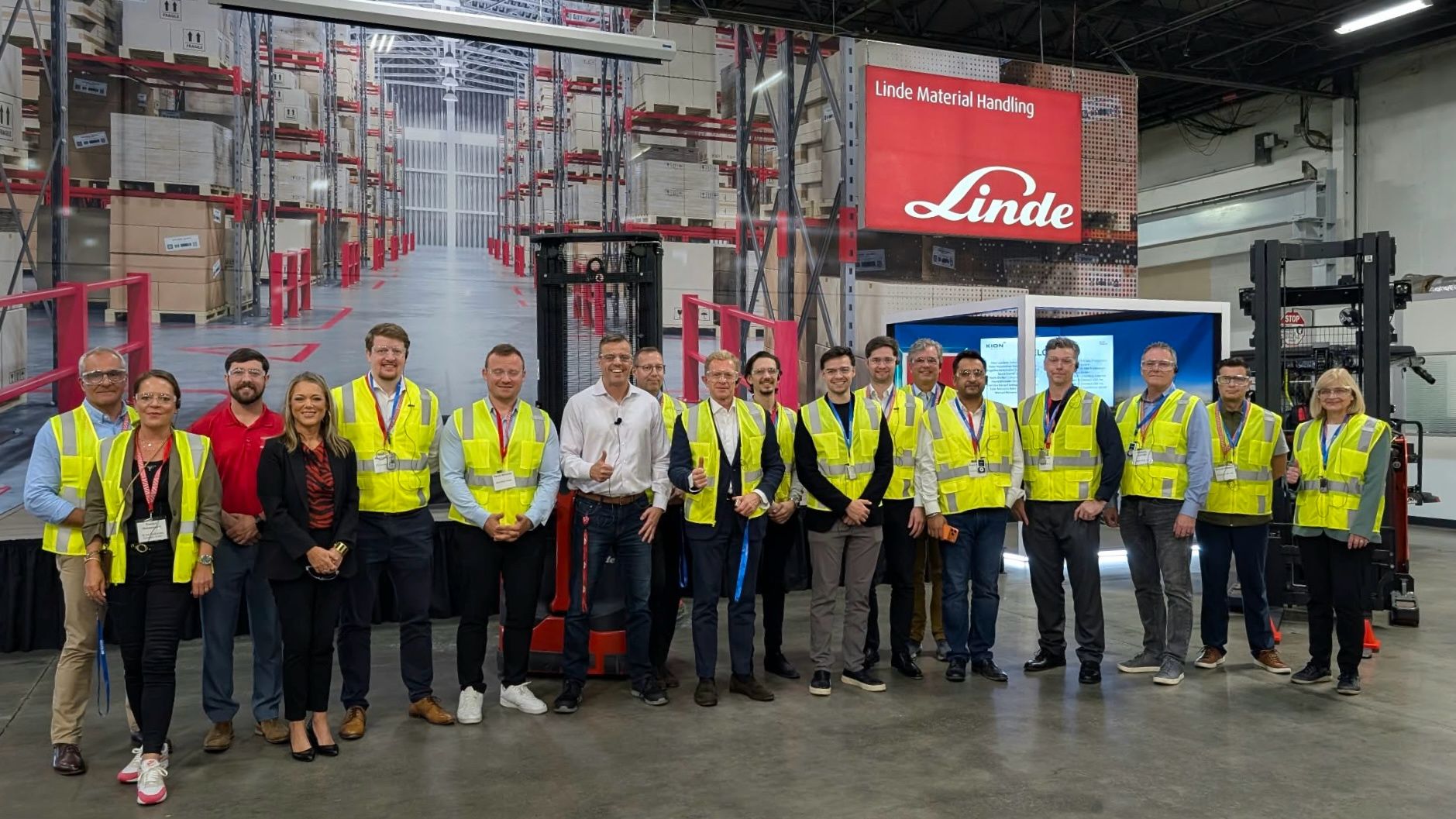
At KION North America in Summerville, we saw industrial trucks and warehouse equipment being configured specifically for the North American market. KION's Summerville operation produces electric and combustion-engine counterbalance trucks as well as warehouse equipment, including products under the Linde Material Handling brand. What stood out to us was how international the production process remains even when the finished product is being built for an American customer. Trucks and components originating across KION's global network ultimately come together in South Carolina to meet very different warehouse layouts, customer expectations and operating conditions.
Later that afternoon, Bosch Charleston gave us another perspective on mobility manufacturing. The site has been part of Bosch's U.S. manufacturing footprint for more than 50 years and today produces products ranging from fuel-system components to electronic stability control and electric motors. Bosch has continued investing heavily in the Charleston operation as the automotive industry evolves toward electrification. One detail that immediately caught our attention: Austrian-made AGILOX autonomous mobile robots were moving across the production floor throughout the visit. It was a small but very visible reminder of how Austrian industrial technology is already embedded in major U.S. manufacturing operations – often behind the scenes, but directly supporting how these plants move materials and organize production.
For our delegation, these two visits highlighted two sides of the same story: established global manufacturers are continually adapting their products and production systems for the U.S. market. That creates opportunities not only for traditional automotive suppliers, but for companies supporting testing, automation, intralogistics and production itself.
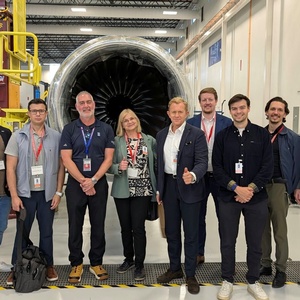
The following morning brought us to Boeing South Carolina, home of the 787 Dreamliner final assembly operation. Seeing a widebody aircraft move through production is impressive on its own, but perhaps even more striking was the scale of what is being built around us. Boeing is investing more than $1 billion to expand its South Carolina facilities and increase future 787 production capacity, including a new final assembly building. From there, we headed south to Savannah.
One of the goals of these missions is to show companies not only the major OEMs, but also what their regional supply chains actually look like. Our visit to Aerotech Machining did exactly that. From its facility outside Savannah, Aerotech produces precision-machined components using more than 40 CNC machines and serves industries including aerospace. Seeing the operation up close gave the delegation a very different perspective from visiting a global OEM: how a specialized regional supplier manages production, quality requirements and delivery for demanding aerospace customers.
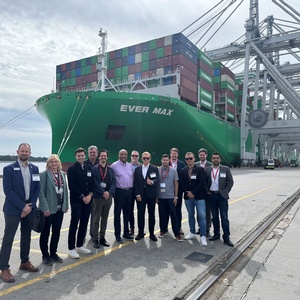
The Port of Savannah remains one of the favorite stops in the region because it helps connect everything else we see. During our visit, we learned that container trade between Savannah and Austria has grown 204% since FY2022, reaching 4,561 TEUs in FY2026, and that Savannah now accounts for roughly 10% of Austria's container trade through U.S. East Coast ports. Those numbers put the industrial relationship into perspective. Austrian-U.S. trade does not happen in the abstract – much of it physically passes through infrastructure like this before reaching manufacturers and customers across the Southeast.
We finished the mission at Rolls-Royce in Savannah, where its customer service center supports Gulfstream and its customers. The facility brings customer support, on-wing services, powerplant completion and warehousing together close to Gulfstream's Savannah operation. It was a fitting final stop after three days focused on the connections between manufacturing, suppliers and the infrastructure supporting them.
Four years – and around 50 companies later
What started as an automotive-focused trip four years ago has become a regular fall offering for Advantage Austria USA in the Southeast. Around 50 Austrian companies and their U.S. subsidiaries have now participated in this mission series. For us, the goal is simple: make those three days as productive and lead-generating as possible. A factory tour is interesting, but the real value comes from what happens around it – sitting down with decision-makers, understanding how companies procure in the United States and finding out where an Austrian capability might solve a real problem. Some conversations turn into immediate leads. Others become relationships that develop over several years. Both matter. After four editions, one thing has become increasingly clear: the Southeast remains a region Austrian industrial companies should be paying attention to. Investment is continuing, production capacity is expanding and the supplier networks around these facilities are still evolving.
We look forward to continuing the journey next fall. If your company is active in manufacturing, industrial technology or mobility and is looking to grow in the United States, we would be glad to have you join us.
Eliot Leadem, Business Relations Manager – Automotive & Mobility Advantage Austria USA